
Photo Credit: tvN
In K-drama land, two dramas stand out in recent years for their incorporation of fantastical elements in story-telling and their use of excellent cinematography to construct a fantasy world in which deities, goblins, grim reapers, spirits and ghosts take centre stage. These mythical creatures are made believable and feel almost real for the avid fan or casual viewer. This perhaps explains why the two tvN dramas, Guardian: The Lonely and Great God (Goblin)and Hotel del Luna (HDL) were able to achieve high ratings during their runs. Goblin peaked at around 19% nationwide when it was first aired in Korea in 2017 while HDL recorded up to a 12% rating for its final episode in 2019. In fact, both dramas are ranked among the top ten of Korean dramas in cable television history.
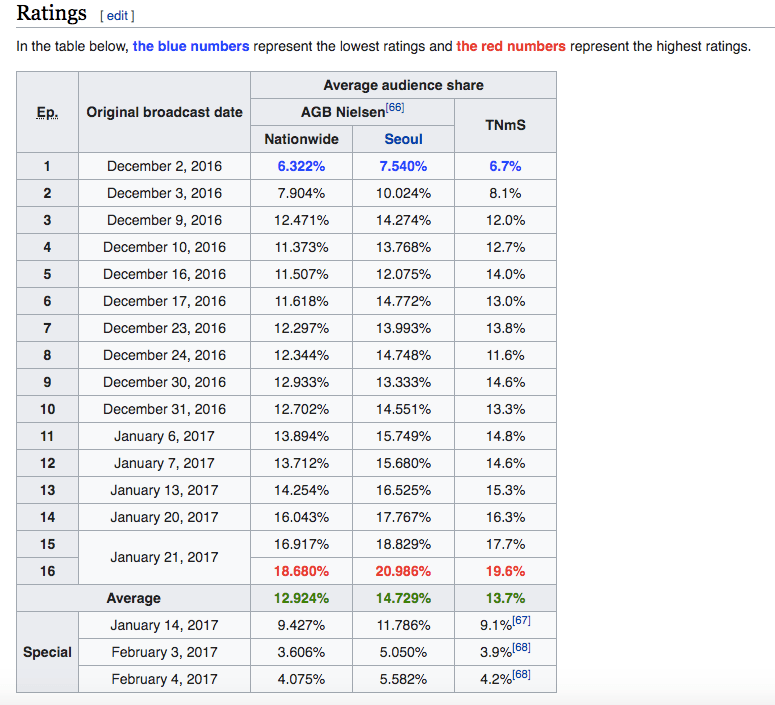
TV ratings for Goblin
Photo Credit: Wikipedia
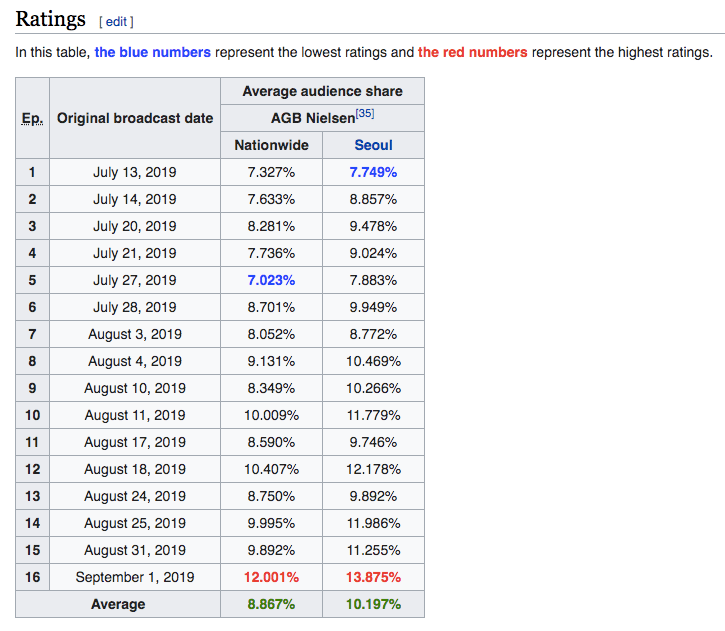
TV ratings for Hotel del Luna
Photo Credit: Wikipedia
Beyond the picturesque images onscreen, another reason for the popularity of both dramas can be attributed to their engagement with the central theme of death. Even among the vast assortment of ingenious K-dramas, the two dramas still stand out with their unique subject matter. Quoting from Goo Chan-sung, the male protagonist from HDL, a person’s evil deeds “won’t end with death” and both Goblin and HDL attempts to imagine a life after death, presenting an alternate reality where characters deal with the negative consequences of their past actions in life, learn the importance of letting go of their grudges and the significance of their choices. In an in-between space that arises out of the transition between life and death, human assistants also exist to highlight the transience of life. Moreover, both dramas prominently feature a grim reaper or Jeoseung Saja (저승사자) in Korean which literally translates into “afterlife messenger”, but to different effects.
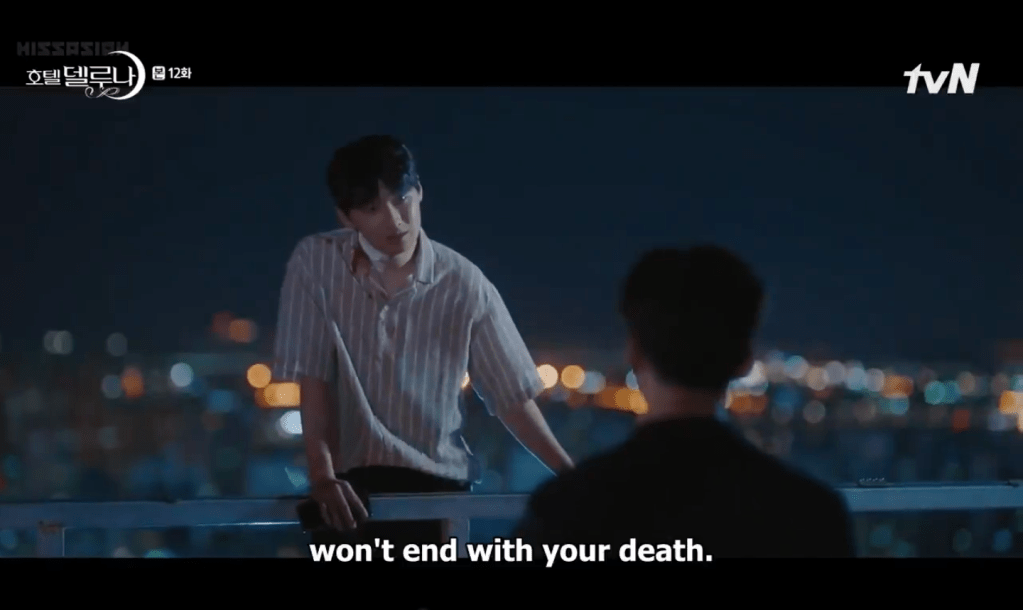
Photo Credit: tvN
Punishment of Everlasting Life or Everlasting Death
Interestingly, before expounding on their views about death, both dramas first demonstrate the value of life, death’s opposite, as a premise to their plots. The leads, Kim Shin in Goblin and Man Wol in HDL are shown in the beginning of their respective dramas to be stuck in limbo on earth in which they are neither dead or alive, as a punishment for killing indiscriminately and taking human lives with their swords, until a certain condition is met.
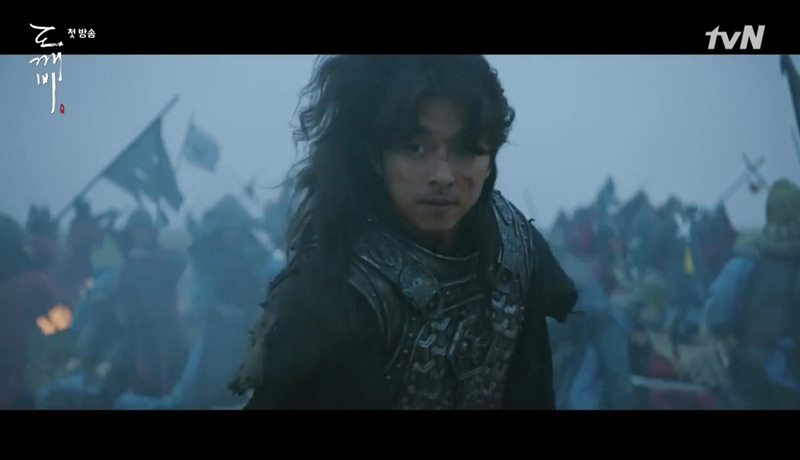
Photo Credit: tvN
In Goblin,Kim Shin is portrayed as a ruthless warrior who brutally cuts down his enemies. Upon his death, he is resurrected by an unseen God but is condemned to “live alone in immortality and witness the deaths of those [he loves]” because “no death will be forgotten”. “This is the prize [God] gives him, and the punishment [he] receive[s]” until he can find the Goblin’s bride to remove the sword from his chest and end the curse. In HDL, Man Wol is punished for having spilled the blood of many people. Her soul is tied to The Moon Tree and she is asked to drink a wine by Ma Go which made her the owner of the inn or the Moon Lodge that later became Hotel del Luna. By working hard to serve her hotel’s guests for the past 1000 years, Man Wol is able to atone and repent for her sins while waiting for an opportunity to resolve her unfulfilled desire for revenge.
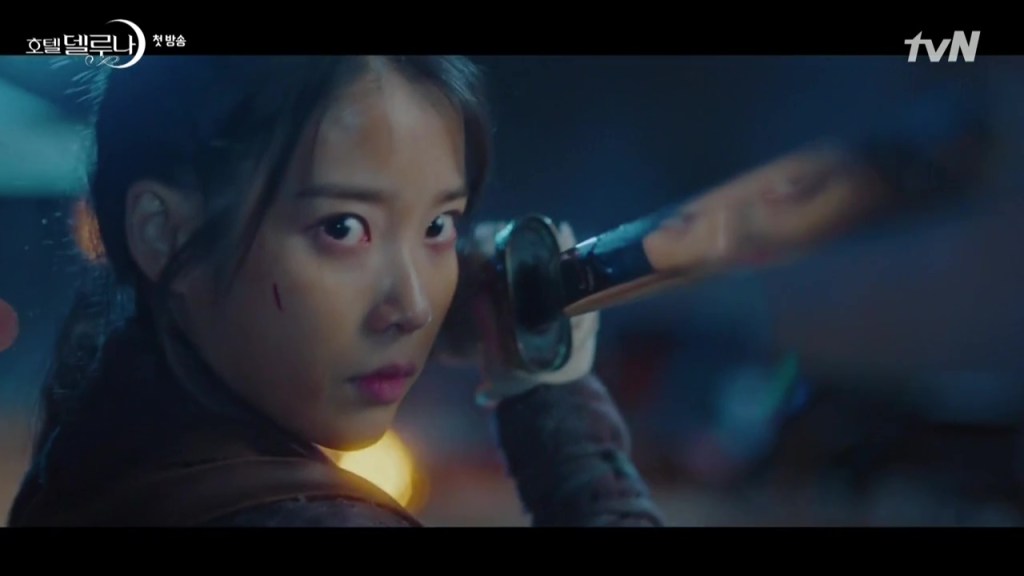
Photo Credit: tvN
However, while the two leads are punished for their transgressions against human life, both dramas also provide examples of how the deities are just in their judgements. Despite being merciless killers, the audience is led to be sympathetic towards Kim Shin and Man Wol who are forced to kill due to their unfortunate circumstances. For instance, Kim Shin strives to be victorious in his battles to earn the favour of the king, who is also his brother-in-law. This then results in his downfall because his military prowess invited suspicion from the very king he had served loyally. Similarly, Man Wol is betrayed but the betrayal is more heartfelt because it was by the man she had loved, Chan-myung. The heartache subsequently drives her into a frenzy and she proceeds to commit mass massacre.
Wisdom of Letting Go
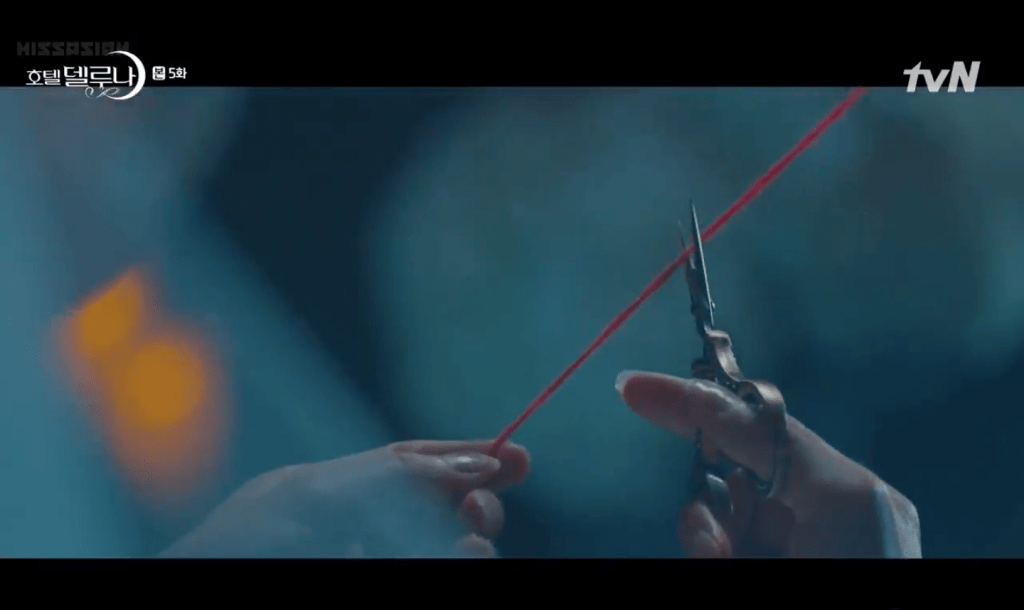
Photo Credit: tvN
In both dramas, the idea of reincarnation is used as a recurring motif. Characters are constantly deliberating over the option of ending their time on earth as ghosts or other supernatural beings and move on to the afterlife or ironically, to remain haunted by their own past.
On a side note, the Hong sisters (writers of HDL) are conscious of the fact that they are adding on to the already existing discourse about how people should perceive death and the afterlife within the expanding collection of K-dramas that have established the same themes. This is clear from their cheeky parody of Goblin in a particular scene of HDL:
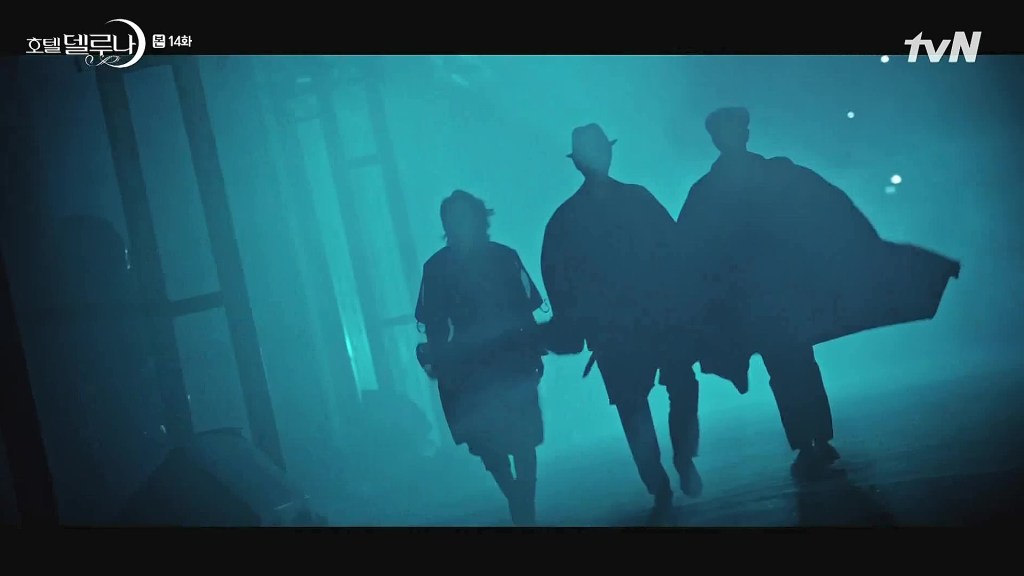
Photo Credit: tvN
This is the classic scene from Goblin:
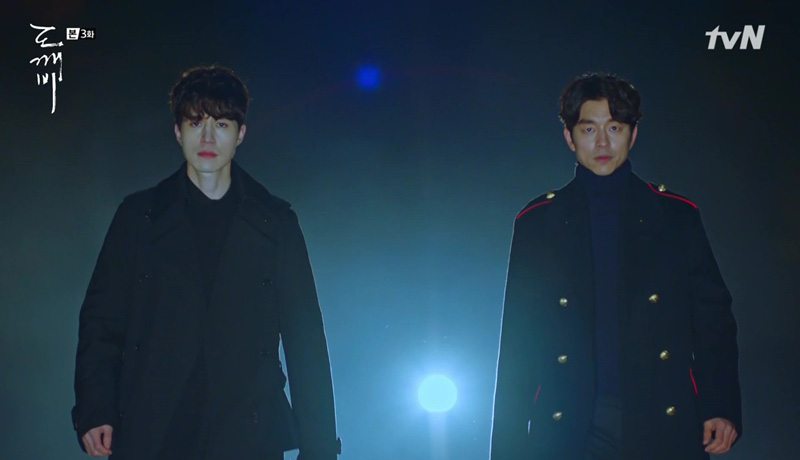
Photo Credit: tvN
HDL’s parody of Goblin illustrates its self awareness of its similarities with its predecessor. In Goblin, Kim Shin is faced with the dilemma of allowing Eun-tak to remove the sword from his body to end his existence or to maintain the status quo after he had fallen in love with her. The grim reaper played by Lee Dong Wook also insists that dead souls drink the tea of oblivion before going off to the afterworld, suggesting that being able to forget the painful memories of their past lives is a blessing.
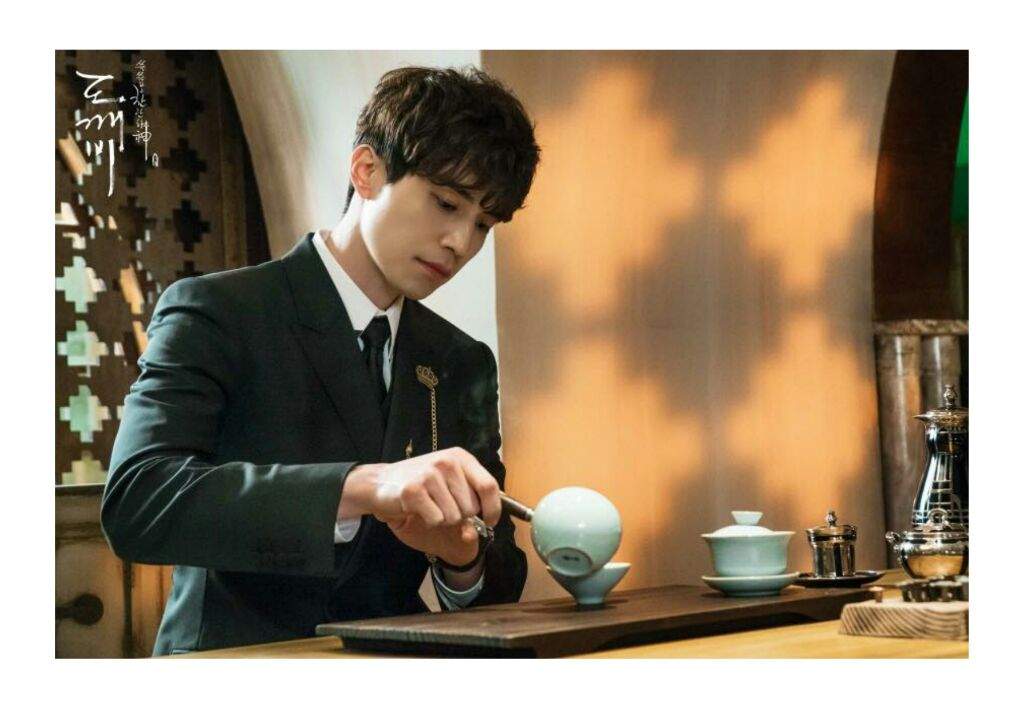
Photo Credit: tvN
For the ghost employees of Hotel del Luna, the hotel enables them to work out their grudges. For example, the longest employee of the hotel and the Sky Bar’s bartender, Kim Seon-bi, waited at the hotel for a chance to clear his name after committing suicide as a result of getting wrongfully accused of being a “salacious scholar”, for writing stories about the lives of commoners. Ji Hyun-joong, the hotel’s receptionist, was also motivated to stay at the hotel because of his wish to see that his friend takes care of his sister as a punishment for accidentally killing him. Likewise, Choi Seo-hee, the hotel’s housekeeper buys time at the hotel due to her strong wish to avenge her daughter’s death and see her in-laws’ family die out with its last heir. Lastly, for Manwol, her role as the owner of the hotel is a test by the deities for her to empty her need for revenge.
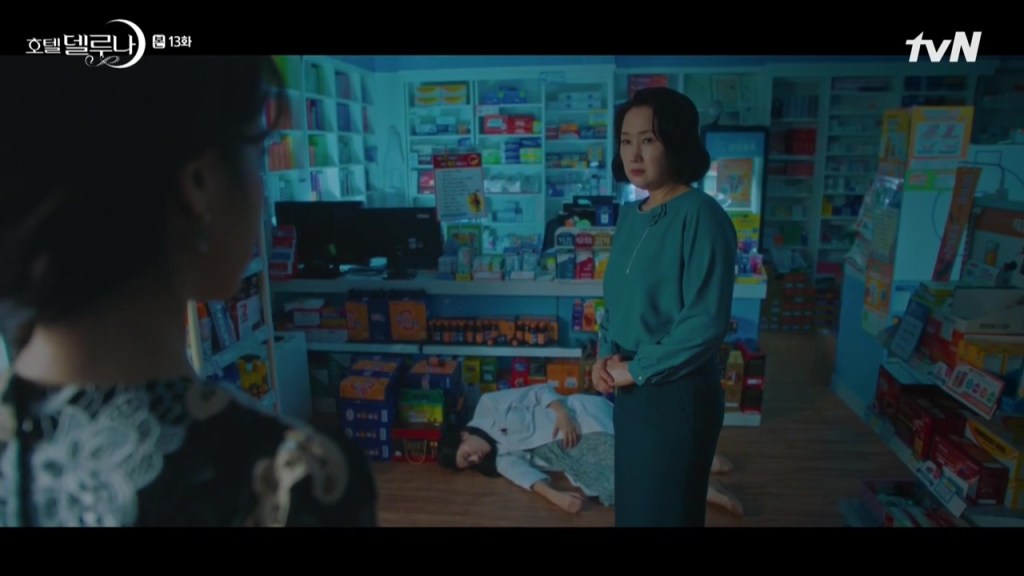
Photo Credit tvN
Reincarnation is regarded as a reward and both dramas promote a stance whereby letting go of past grievances is preferred because it allows characters to reconcile or overcome their inner demons and finally be at peace. The Pink Ma Go in HDL articulates this in her advice to the ghost bride who cannot leave her boyfriend behind and Man Wol herself when she says, “it takes more courage to let go than to hold on”. Other scenes in the drama reinforces this outlook. For instance, when Seo-hee witnesses how the pregnant girlfriend of the last heir from the family she hates is in pain, her grudge is not resolved and she makes an effort to help the woman instead, even though it goes against her original intention. Man Wol is also made to reassess her grudge with Mi-ra as she reflects on Ma Go’s advice to let ill fates pass by because they are merely “lost memories for the reincarnated”. Therefore, holding grudges does not lead to peace in the dramas and characters are encouraged to let go and move on to the afterlife to be reincarnated.
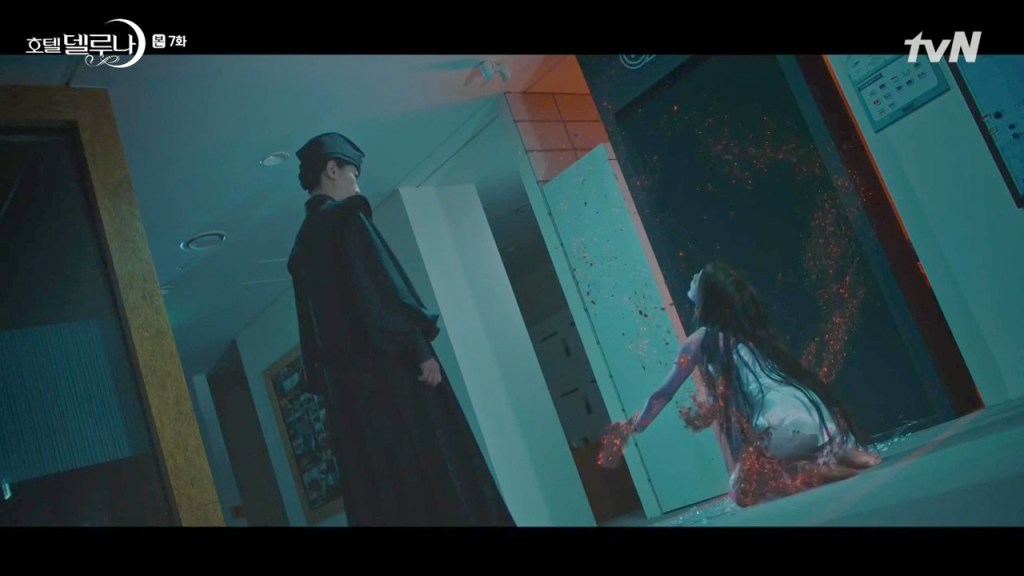
Photo Credit: tvN
In HDL, those who cannot let go or forgive their enemies and cause hurt to humans will become evil spirits who will be persecuted by the Black Ma Go. They are made to perish and cease to exist. Similarly, evil spirits in Goblin will be met with a tragic end.
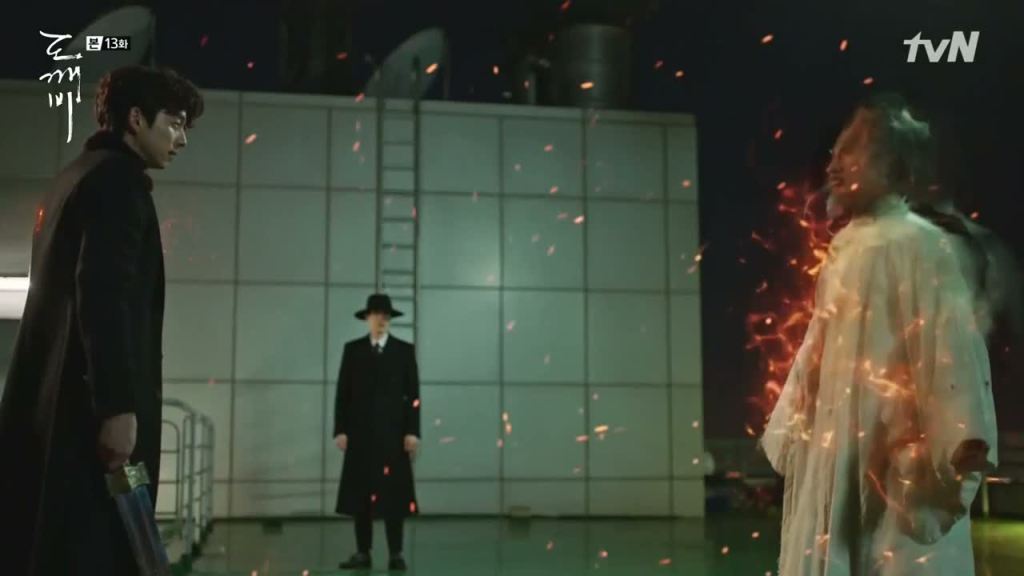
The evil spirit, Park Joong-heon, who tried to harm Eun-tak vanishes as Kim Shin swings his sword at him.
Photo Credit: tvN
Fateful Choices
In both dramas, the characters’ possess an agency to decide their fates for themselves and their actions are shown to set off a chain or series of events that have implications for their lives later. Furthermore, their choices also underscore the power of love and the pain of sacrifice which are also consistent themes in the dramas.
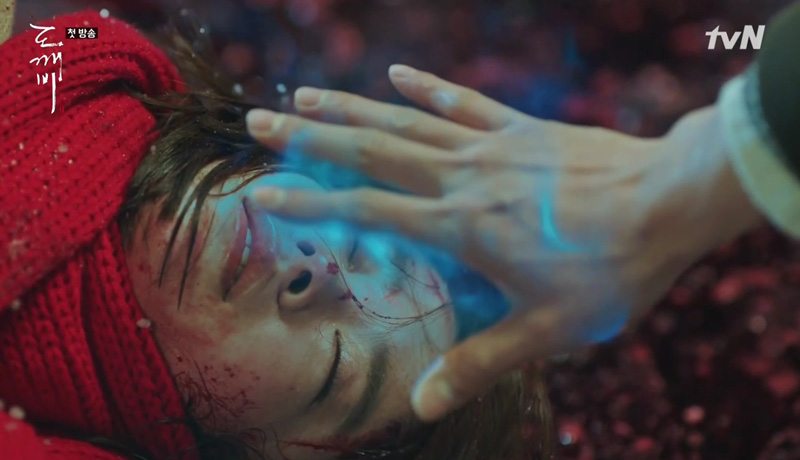
Photo Credit: tvN
In Goblin, Kim Shin saved Eun-tak’s mother from death when she was still pregnant with Eun-tak, thereby marking her as his bride. He then fell in love with Eun-tak and chose to return to an endless life on earth even after the sword is pulled from his chest. Similarly, in HDL, Chan-sung saved Man Wol when there were both young in the Joseon era and thus entwined their past, present and future together. When it was time for Man Wol to leave to the afterlife, Chan-sung asked that Man Wol not be stuck with him in their current lifetimes and instead wished for them both to be able to live new lives together after they have both reincarnated. On the other hand, Man Wol went from wanting to exact her revenge and be obliterated to not wanting to leave the world after learning about forgiveness and experiencing love with Chan-sung. However, she still let Chan-sung choose for her and eventually moved on to the afterlife.
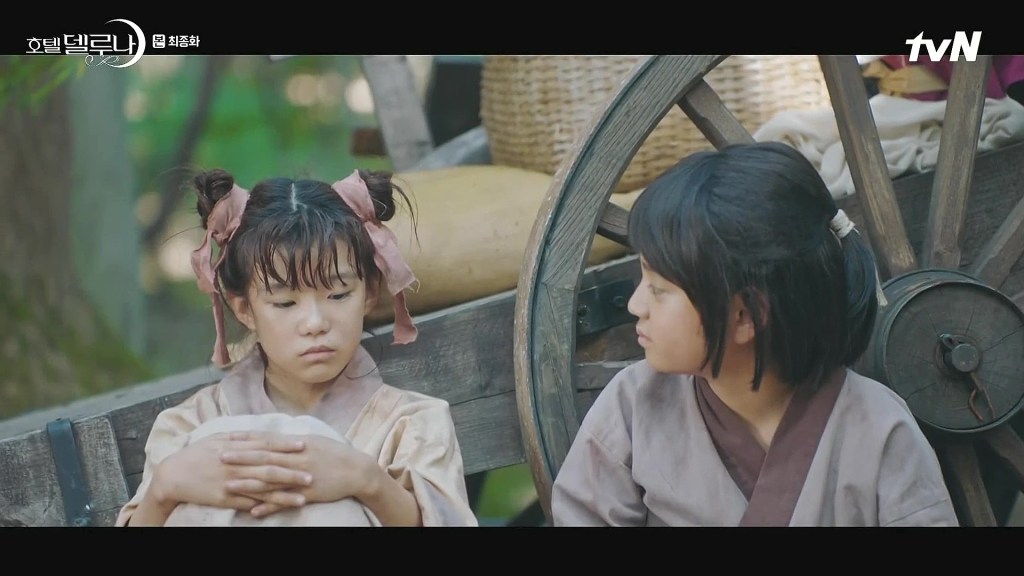
Photo Credit: tvN
By doing so, Man Wol gave up the time she could have had with Chan-sung in that lifetime and this concept of sacrifice is also evident in Goblin where Eun-tak sacrificed her life in a collision with a truck so that the children on a school bus will be spared death.
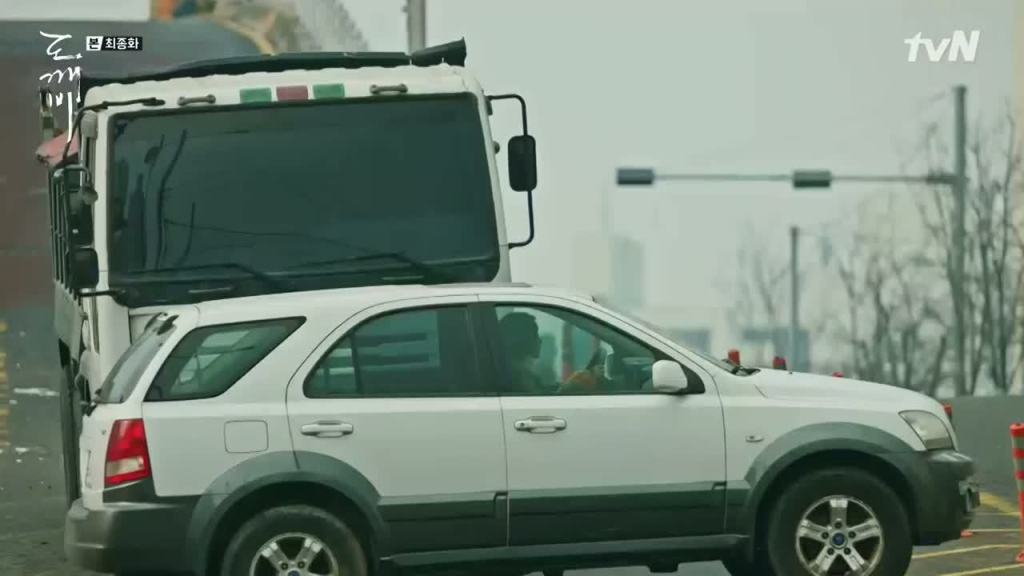
Photo Credit: tvN
Hence, in both dramas, the deities let the characters have free will to make choices.
Significance of the Grim Reapers
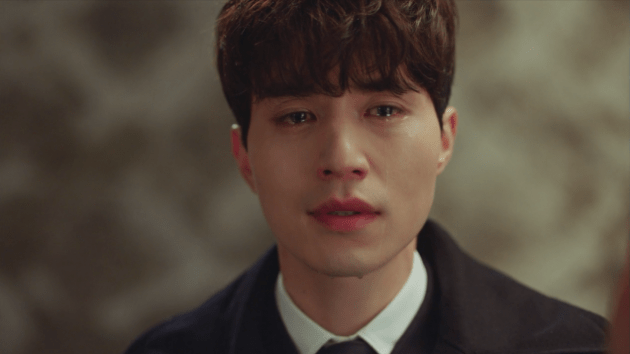
Photo Credit: tvN
In Goblin, the grim reaper has his own story. While the grim reaper in HDL serves as a plot device, he also has an integral role to play in bringing out the key themes of the drama.
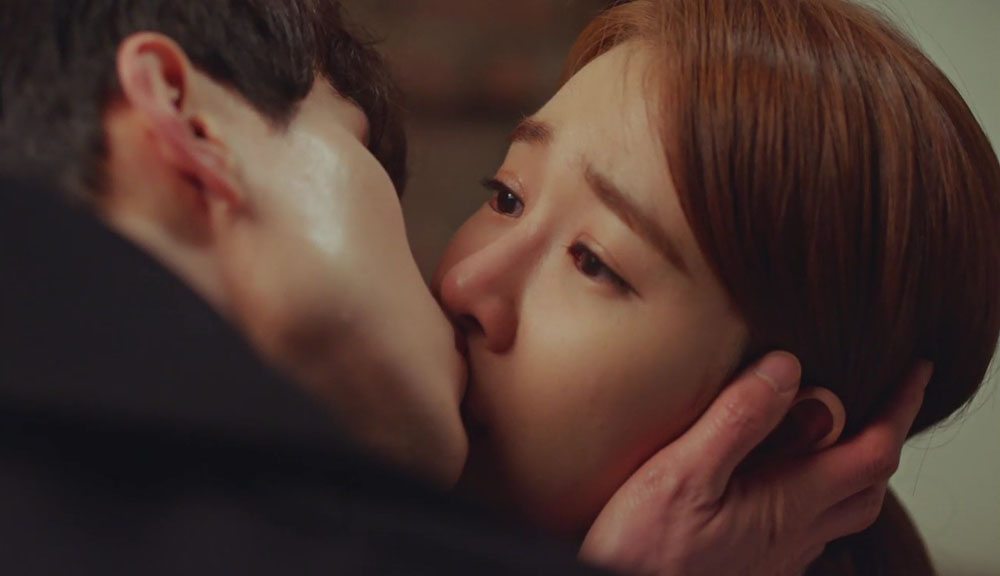
Photo Credit: tvN
The grim reaper’s story in Goblin shows how the pairing of lovers in the past continue in the present and future. Traces of the personalities of the original people carry over in the reincarnation although new bodies or souls cannot remember their previous sins. This is evident in how Sunny and the grim reaper falls in love again despite each of them not remembering their past selves. On the other hand, Mi-ra and Young-soo continue their ill-fated past as enemies and became lovers instead in HDL.
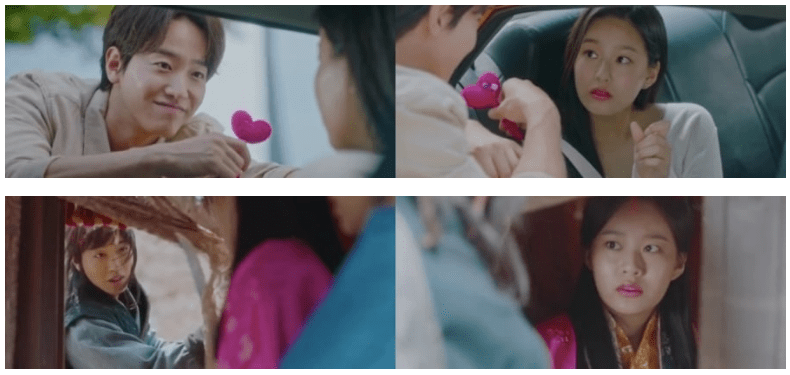
Photo Credit: Soompi
In comparison, the grim reaper in HDL is a smaller character but he exists to show how death is not an omnipotent force. It operates on the principle of fair exchange as seen in the many transactions made in HDL. The grim reaper never forces the dead to board the bus or limousine to the afterlife and makes deals with Man Wol to achieve his objectives. For instance, there is an episode where a traditional medicine physician was able to cheat death by buying lifelines off his patients to prolong the life of his dying son. Yet, he and his wife were the ones who have to pay the price by having their own lives cut short and they can be observed to have aged a lot faster. This idea of fair exchange, where a person gives a life for a life is emphasised in how Man Wol worked to bring the physician’s son to the afterlife in return for the grim reaper to do her a favour and bring in the vengeful spirit who has been targeting Chan-sung as her way of protecting him.
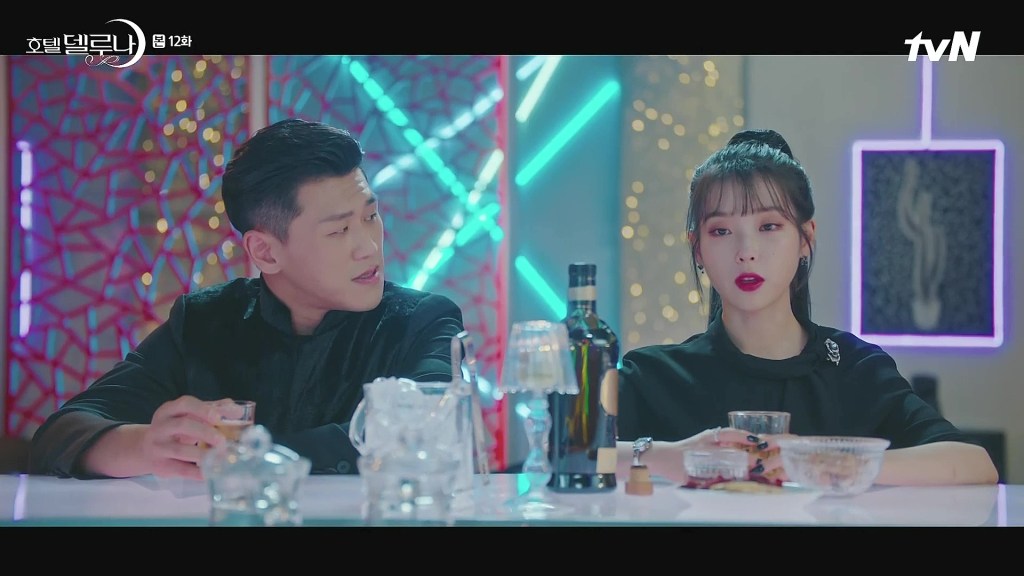
Photo Credit: tvN
Similarly, in Goblin, Kim Shin begs the Gods to let him live for eternity again but in a surprising twist of fate Eun tak’s life is cut short instead and Kim Shin is only able to be with Eun-tak during her four short lifetimes.
Transience of Life
In both dramas, the ghosts and the goblin is seen to require the help of human assistants. These human assistants come in great numbers and highlight the underlying notion of the transience of life.
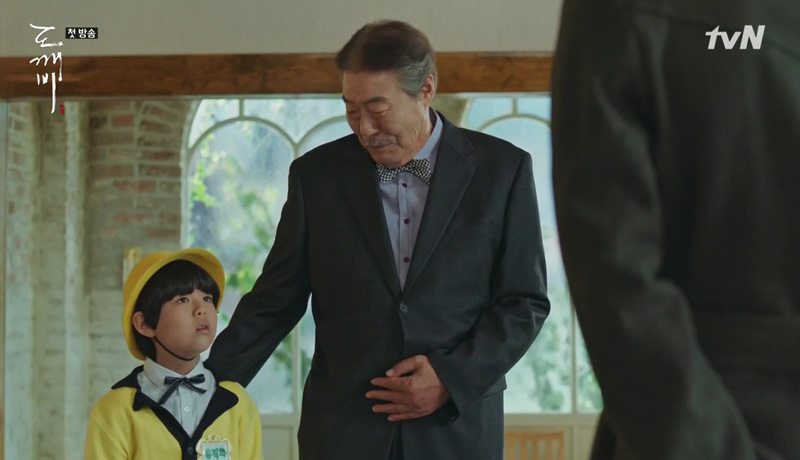
Deok-hwa being introduced to Kim Shin by his grandfather
Photo Credit: tvN
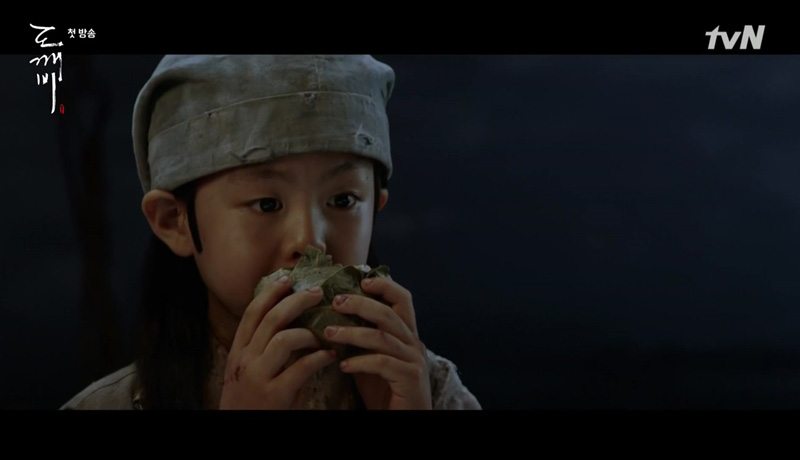
Deok-hwa’s ancestor, the first to serve the goblin
Photo Credit: tvN
For example in Goblin, Kim Shin has a family dedicated to serving him through the generations while Man Wol in HDL had 99 human managers. In a heart-rending scene with Manager Noh, the 98th general manager, he hangs up a portrait of Man Wol on the wall while saying sadly, “This photo will be the only proof of the time I’ve spent in this life. Will she remember a mere human who’s just passing through here?”. It is noteworthy that he took the picture but is not featured in the portrait, bringing attention to the drama’s message that everyone is just a passer-by in their own lives. The double use of the largest digit ‘9’ emphasises how life is fleeting and just like how innumerable people pass by in our lives, we also come and go. Life and death is but the start and end of our short journeys through life and there is always something waiting ahead, such as the afterlife. In Goblin, Eun tak’s four short lifetimes are also a reference to this common message between the two dramas.
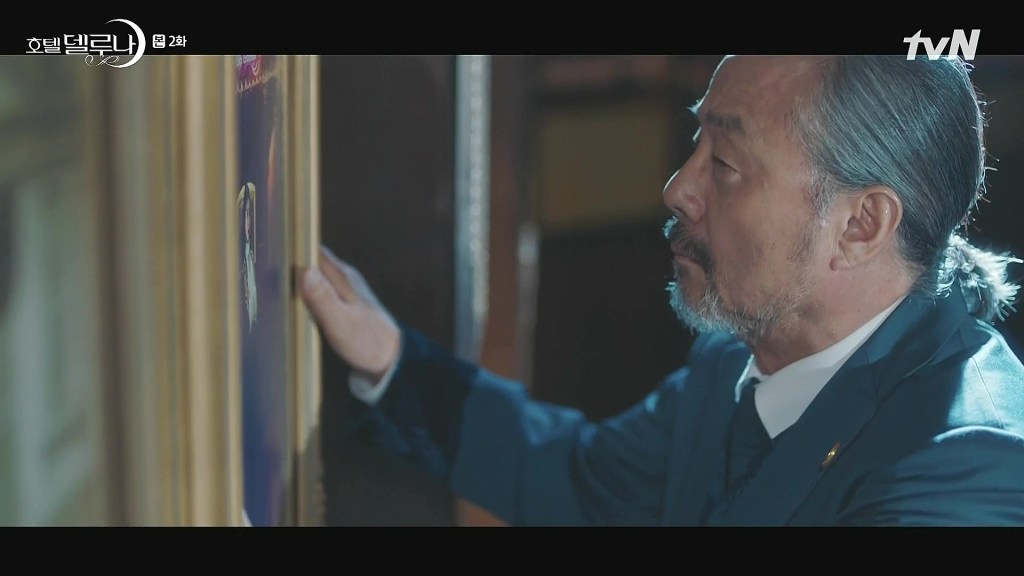
Photo Credit: tvN
However, the dramas also reveal that life is transient but nonetheless valuable because each moment spent is precious. The moments people spend with their loved ones create memories that can leave an indelible mark on their lives and its impact can be felt when people mourn and feel pain when someone they love dies.
Beyond the Beautiful
There are numerous parallels between the two dramas. Although the dramas are known for their beautiful images, they also engage with more serious themes of death, punishment, the afterlife and reincarnation, desires for revenge versus forgiveness, individual choices and the value of life.
REFERENCE
packmule3. “Hotel Del Luna: Comparisons with Goblin.” Bitches Over Dramas, 11 Sept. 2019, bitchesoverdramas.com/2019/09/11/hotel-del-luna-comparisons-with-goblin/.
 Rachel's Blog